
How do I interpret the digital humanities? A terrifying and innocuous question, described by Ted Underwood as, “A welcome mat followed by a trapdoor.” [Callaway et al, 1] A metaphor I admittedly I felt, as my initial definition of “the humanities extended into the digital sphere” proved woefully inadequate on my first day of class.
What makes the question so unique and terrifying is that the digital humanities are extremely broad, and you must be sure not to leave out items and ideas that are part of the field. But if defined or done incorrectly, you risk participating in oversimplifying, stereotyping, or eliminating the culture of marginalized peoples.
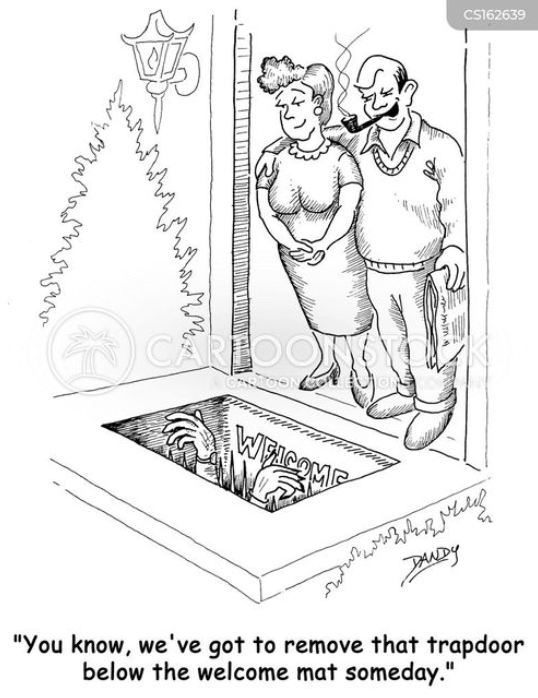
Digital Humanities Professors asking their students to define Digital Humanities on their first day of class
A very humorous example of how the extreme broadness of the digital humanities presents a unique challenge when trying to define it concisely was when I was reading the Wintjes Archive excerpt in the class files. While looking at the pictures, I was struck with the question of whether the digital images present in the reading qualified as an element of the digital humanities. They were clearly taken with digital cameras, but they were physically printed in a book, which itself was not digital, and thus, by my previous definition of only including digital media, could not be an element of the digital humanities. Even worse, I was reading this book as a scanned document on a cloud drive!
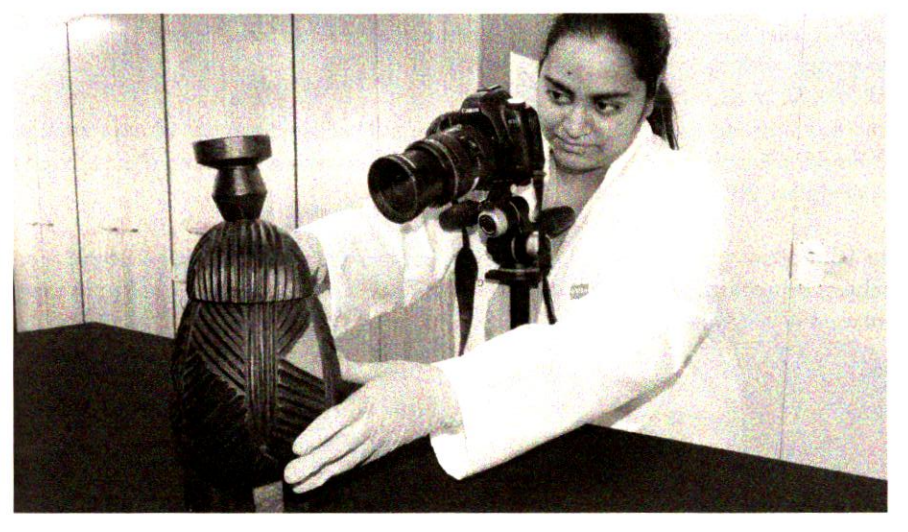
An archival picture in Archives of Times Past, reexamining artifacts inappropriately labeled under revisionist history
This image was taken using a digital camera, uploaded into digital textbook design software, printed into physical media, and then scanned and uploaded onto a could drive as a pdf.
Was it an element of digital humanities or not? Was being present in a digital form really a requirement? From a series of notes to digitally designed textbooks to physical copies to scanned PDFs on cloud drives, at what point did the book become “digital humanities”? Did it ever stop being a part of the digital humanities?
Eventually, after overcoming this existential crisis (and freaking out, realizing I would have to define it as the first question on my blog), I came to understand that digital humanities was not a “state of being” of an element of the humanities that was revoked or given. Instead, it was more similar to a question of whether digital media or methods shaped our perception, communication, and interpretations of ideas and information.
For the Wintjes Archive in Pictures, by designing the text-picture archive online, it enabled the creator to have far more control over the appearance and structure of their work and increased the transmissibility of its information when it was printed into physical copies. Lastly, its change to a PDF document on a cloud drive is part of our increased movement to a digital age where most textbooks are online, due in part to ease of access and reduced cost. There was no point when this media became “digital.” Instead, digital humanities better describes the technological tools that we use to shape and communicate our ideas and the ideas of the author, and how those ideas change because of the digital media we are using to represent them. In this way, my interpretation of the digital humanities changed from exclusively being humanities works and projects present in digital form (that is, merely being a subset of the humanities) to an interpretation of the entirety of the humanities through a digital lens.
“Not a thing, but an idea” – Me
However, please notice I used “a better,” instead of “the best,” way to describe the digital humanities. This is because even though our new definition is more accurate, it can still be improved. (Though I do not pretend to have the “best” definition waiting for you at the end of this blog).
Another issue with defining the digital humanities is that you must be careful to include a contextual analysis of all of its elements and how they interrelate. For example, while reading the first document of the class, I learned that the digital humanities “includes technological tools of computing, analysis and recording.” However, after hastily appending this to my initial definition, I learned that just using digital tools and presenting the information you find could be incredibly fallacious and risks stereotyping groups of people and ideas.
For example, using distanced-reading tools without contextual analysis can result in a number of misleading, stereotypical, and harmful conclusions about minority groups. In a 2013 macroanalysis of themes in 19th-century novels, grouping the themes by the authors’ gender revealed an extremely stereotypical divide. The top themes for women authors being: “Fashion,” “Children,” “Flowers,” “Sewing,” and a series of themes associated with strong emotions. [Callaway et al. 6] Callaway reminds us that simply observing this result and assuming it was what women in the 19th century found important (which was what the author of the initial macroanalysis did) stereotypes women and serves as a barrier for women entering the textual analytics field. As Callaway states, “[w]omen entering a sub-field heavily reliant on math, statistics, and rationality, such as text mining, might not feel especially welcome if the field is producing descriptions of women writers as emotional, fashion-obsessed mothers.” [Callaway et al. 7]
Instead, analysts should use another element of the digital humanities: critical analysis and reasoning of the information found using digital tools. A critical thinker might recognize this disparity could be because the societal norms, activities, and expectations of the time might have restricted the themes women writers could include in their works.[Callaway et al. 8]
As a result, we also have to add the process of critically analyzing the discoveries found by these digital tools, asking questions about those findings, and using them to determine what the next steps should be to better understand the world around us.
In summary, my interpretation of the digital humanities is an approach to humanities that uses digital tools and media including archival storage, data processing techniques, and electronic communication. To analyze, disseminate, or reframe ideas around human culture. However, it also includes working to understand how digital tools and media shape what we see and understand about the world around us, and the arguments for how to use those tools to get the most insightful questions, details, and answers relevant to those who are studying it and others looking to analyze those findings.
A vital element of all humanities is archiving. The practice of storing information is found everywhere in all walks of life, from science, math, art of course the humanities. But why do we create and use archives?
“If a tree falls in a forest and no one is around to witness it, does it make a sound?” Before I joined this class, I felt as though this paradoxical question almost perfectly summarized why humans archive information. And although my definition of what an archive could be has changed, the reason of why we archive has remained constant.
To me, humans archive to protect the information they value from entropy. As generations come and go, humans create archives to store information (which could be ideas, knowledge, or beliefs) for future generations, later reference and eventual dissemination. To archive means to preserve, and when human beings consciously archives something, they are storing that information to use later.
To respond to a few counterclaims on my overly simplistic argument, I am answering th question of ‘why’ we archive, not what is an archive. Although many things can unintentionally, become archives (for example, a dinosaur fossil can become an archive of prehistoric history). This archive was not intentionally created as such, thus should not be included in the ‘why we’ portion of archiving. If a paleontologist discovered the fossil and wants to archive it/use it as an archive, they will store it to prevent its destruction or theft and for analysis. In the end, the person must want to store the information and prevent its destruction or loss.
However, I have learned in this class a specific reason for archiving is to create a narrative around selective factual information and disseminating it. Many groups archive to create a narrative or identity around what a nation, person, or culture was, should be, or should be perceived as. From nations emphasizing their own glory and past, activists emphasizing the contributions of marginalized groups, and colonial and apartheid states archiving the savagery of pre-conquered regions before “civilized,” white settlement.
In the first chapter of Milligan’s Archive Stories, he describes the French nation-state under Napoleon and how the French National Archive valued glorifying the French past and national identity, and thus collected and disseminated information that celebrated the French nation and its people while restricting access to contradictory sources. [Milligan et al., 2005]
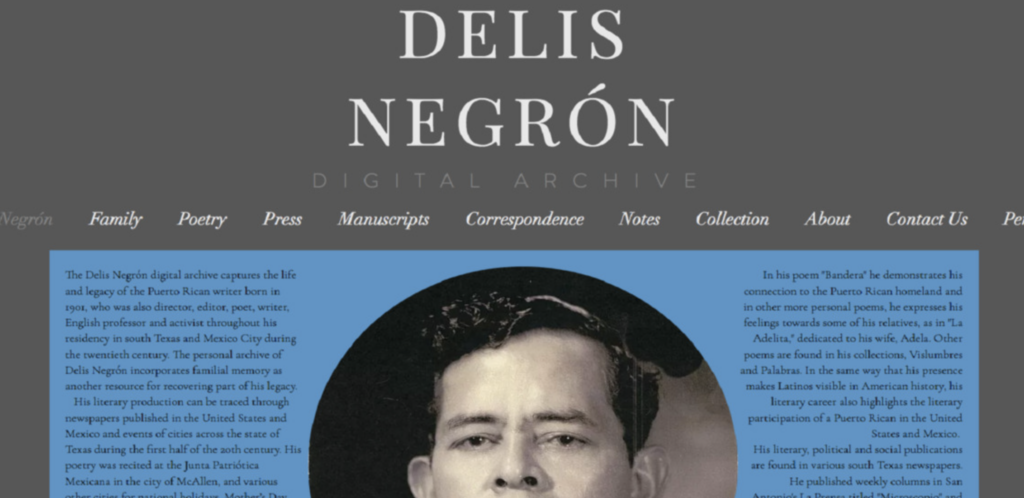
Even modern groups have been careful to ensure the information they have archived fits with the narrative they want to present. When Professor Zapata was creating a digital archive of the life of Delís Negrón and his family, she realized all the information about Negrón’s wife was of a stereotypical housewife. Realizing the exclusion of Latino women from the Latino civil rights movement was not the message she wanted to convey in her archive, Prof. Zapata took steps to emphasize the help Mrs. Negrón provided to Mr. Negrón in his work as a political activist. In this way, when people look through her archive, they will find latino women have had a rich history of participating in the latino civil rights movement.
For white historians describing the history of colonialism, land dispossession, and apartheid in early 19th-century Africa, much of it was recorded as the “mfecane” period, where internal struggles and war between African nations led to the emptying of large swathes of land for white settlement. This narrative has been widely criticized for downplaying the role of the slave trade and external pressures that white nations and settlers played in destabilizing the region. [Wintjes et al., 279] However the benefit of white apartheid states to archive hostry as this is clear, it removes much of the blame of land destruction, and helps justify the conquest of these african regions.
Although what an archive can look like can vary widely, and what is an archive can be seen as anything containing information and can be or is preserved. Regardless, we as humans archive to protect information from being lost and forgotten.
However, after making these two bold claims, I must be candid about my background and acknowledge my limited experience working in the field of Digital Humanities.
For the past four years I have been a Biology and Environmental Science major. The experiences I have had in the humanities have been largely through the lens of environmental conservation, politics, and toxic pollution. For example, last semester I worked on a project designing a policy brief and action plan to protect disadvantaged communities from PFAS, a toxic plastic chemical found at dangerous concentrations in many cities’ drinking water. Our plan involved extensive research on the current management practices of plastic chemicals in water purification facilities, analyzing potential solutions and barriers to implementation such as legal roadblocks and how to fund filtration improvements to public municipalities.
Although this project largely focused on analysis of filtration systems and implementation options, it also required extensive legal research and use of digital archives to complete, an important part of the digital humanities.
As a result of this limited experience , in this class I hope to gain as much knowledge of digital design and humanities as possible. Specifically, I hope to gain skills in web design and learn how to build my own professional website, similar to Professor Zapatas. I also want to learn how to successfully present myself online to legitimize myself to employers and improve my career prospects. I hope to learn skills that are transferable into a workplace environment. However, I would also enjoy learning about interesting sub-fields of the digital humanities, such as distanced reading and critical analysis of complicated questions.
Although I understand that most of these goals might not be conducive to the spirit of the class, I must be candid: as a senior graduating this summer semester and looking into the current job market, I am focused on maximizing my professional skills while also having some thought provoking conversations in my last semester.
Thank you for reading!

Hi, this is a comment.
To get started with moderating, editing, and deleting comments, please visit the Comments screen in the dashboard.
Commenter avatars come from Gravatar.